
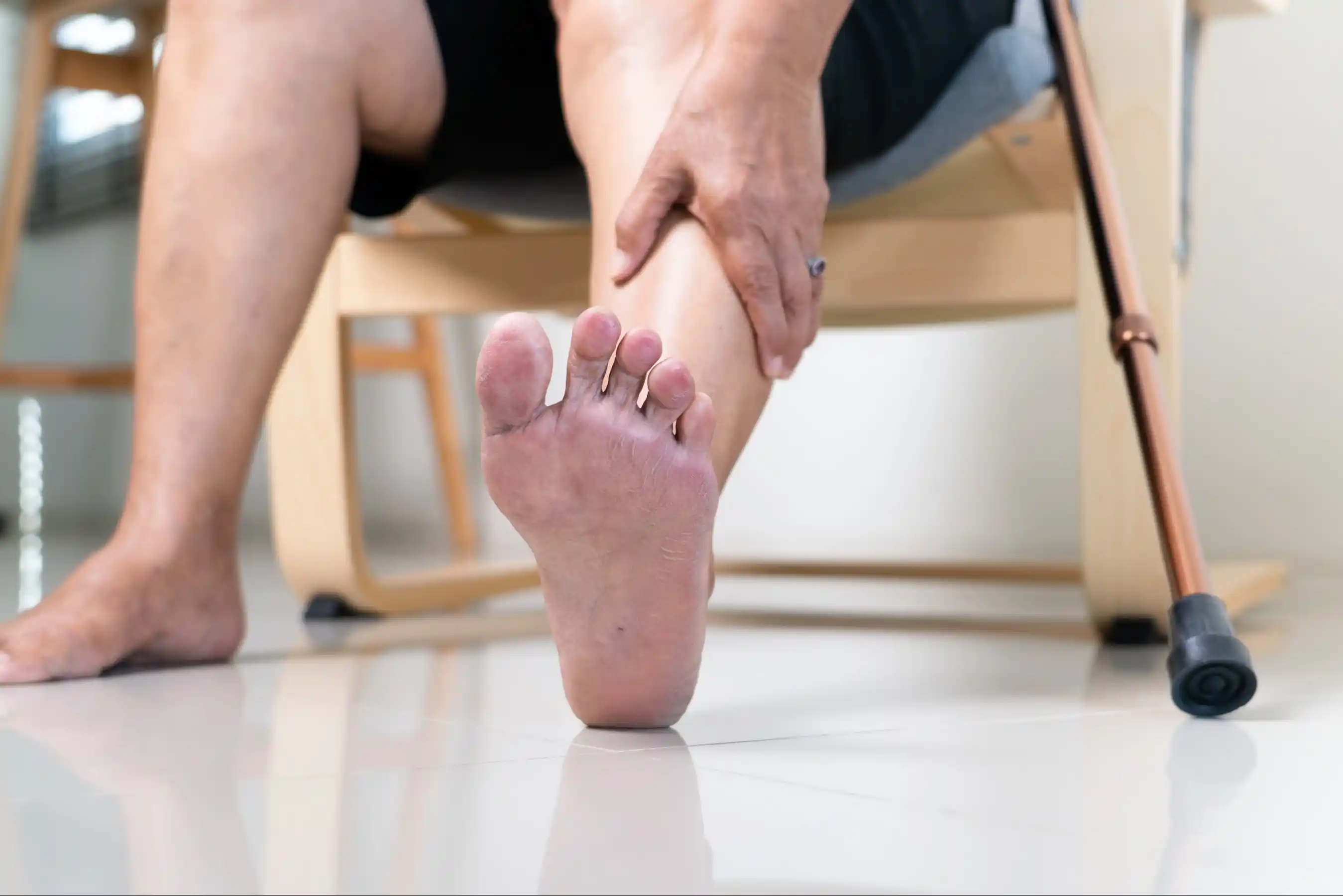
Summer is supposed to be the easy season. For people with diabetes, it is quietly the riskiest one for the feet. Sandals leave skin exposed, sweat softens and breaks down skin, pool decks and beaches invite bare feet, hot pavement can burn soles that cannot feel the heat, and even sunburn on the tops of the feet becomes a problem when circulation and sensation are already reduced.
None of that means you have to sit summer out. It means a handful of simple habits are worth building now. Here are seven, from Dr. Vivian Iwu at Choice Podiatry Center in Marietta.
Habit 1: Inspect Your Feet Every Day
This is the foundation, and summer makes it more important, not less. Look at the tops, bottoms, and between the toes every single day, even if nothing hurts. With neuropathy, no pain does not mean no problem. Use a mirror or ask a family member for the spots you cannot see, and look for cuts, blisters, redness, swelling, and color changes.
Pick a consistent time, like right before bed or straight after your shower, and attach it to something you already do every day. That is how a habit sticks. Sixty seconds of looking can save you months of treating.
Habit 2: Never Go Barefoot, Even at the Pool
Bare feet and summer go together, but not for you. Hot pavement, pool decks, sand, and shower floors all pose a risk, whether from burns, cuts, or fungus. Keep something on your feet at all times, including water shoes or sandals at the pool and beach. A single unnoticed cut from a shell or a rough deck can turn into a wound that will not heal on its own.
This one runs against every summer instinct, which is exactly why it is worth repeating. The pool, the beach, the backyard, and even the walk across a hot parking lot are all places where feet that cannot feel heat or a small cut are most at risk.
Habit 3: Choose the Right Summer Footwear
Flip flops are the classic summer shoe and close to the worst option for a diabetic foot. They offer no support, expose the skin, and rub between the toes. Reach instead for closed toe shoes when you can, or supportive sandals with a secure strap. Breathable materials help keep feet cool and dry. Whatever you wear, check the inside for stray pebbles or rough seams before you put it on.
If you are shopping for summer shoes, look for a roomy toe area, a secure fit that does not slide, and enough cushioning to protect the sole. Break new shoes in slowly, wearing them for short stretches at first and checking your feet afterward for red spots that signal rubbing.
Habit 4: Manage Moisture
Heat means sweat, and sweat is a problem on two fronts. It softens skin so it breaks down more easily, and it creates the damp conditions that fungus loves, especially between the toes. Change into dry socks when your feet get sweaty, choose moisture wicking socks over cotton, and dry carefully between the toes after swimming or showering. Keep the skin moisturized on the tops and bottoms, but leave the spaces between the toes dry.
Fungal infections thrive in warm, damp shoes, so rotating your footwear helps too. Giving a pair a full day to dry out between wears makes a real difference over a hot summer.
Habit 5: Protect the Tops of Your Feet From the Sun
Sunburn is not just uncomfortable on a diabetic foot. A burn is a skin injury, and on a foot with reduced circulation and sensation it can heal slowly and open the door to infection. If your feet are exposed in sandals, put sunscreen on the tops the same way you would anywhere else, and reapply after swimming.
It is easy to forget the feet when applying sunscreen, since they are the last thing on your mind at the pool. Make them part of the routine, the same as your shoulders or your nose.
Habit 6: Support Circulation and Manage Swelling
Heat and long days on your feet can leave them swollen, which is hard on circulation that is already compromised. Stay hydrated, put your feet up when you can, and keep moving through the day to help blood flow. Cooler, less swollen feet are more comfortable and less prone to skin breakdown.
If you notice one foot swelling more than the other, or swelling that comes on suddenly, mention it to Dr. Iwu. Uneven swelling can be worth a closer look rather than something to wait out.
Habit 7: Know the Red Flags
Some things call for a podiatrist right away, not next month. Contact Choice Podiatry Center promptly if you notice:
- A cut, blister, or burn that is not healing
- A sore that is draining, has an odor, or is growing
- Redness, warmth, or swelling in one area
- A foot that looks dusky, purple, or very pale
- New numbness, tingling, or burning
- Any wound that looks infected, however small
When it comes to a diabetic foot, catching something early is almost always the difference between a quick fix and a long one. If a wound does develop, our wound care team treats it in the office.
Schedule a Summer Diabetic Foot Screening
A quick screening before or during the summer gives you a clean baseline and a chance to catch anything small before it grows. Dr. Iwu can check your circulation and sensation, look after calluses and nails safely, and update your footwear guidance for the season.
Book online or call (770) 702-8723. Choice Podiatry Center is at 540 Powder Spring St, Suite B6, Marietta, GA 30064, open Monday through Friday, 9 AM to 5 PM.
Frequently Asked Questions
Why is summer riskier for diabetic feet?
Sandals expose the skin, sweat softens it and encourages fungus, bare feet meet hot pavement and pool decks, and sunburn on the feet heals slowly when circulation and sensation are reduced.
Can people with diabetes wear flip flops in summer?
It is best to avoid them. They offer no support, leave the skin exposed, and rub between the toes. Closed toe shoes or supportive sandals with a secure strap are safer choices.
Should I still check my feet daily in summer if nothing hurts?
Yes. With neuropathy, the absence of pain does not mean the absence of a problem. A daily look at the tops, bottoms, and between the toes catches issues early.
Is sunburn on the feet dangerous for diabetics?
It can be. A burn is a skin injury, and on a foot with reduced circulation it can heal slowly and become infected. Use sunscreen on exposed feet.
When should I call a podiatrist in summer?
Right away if you have a cut, blister, or burn that is not healing, a draining or growing sore, redness or swelling in one area, color changes, new numbness, or any wound that looks infected.