
Most people asking about toenail fungus treatment have already tried a drugstore cream or remedy. The nail still looks yellow, thick, crumbly, or lifted.
The product may not have reached the fungus, treatment may have stopped too soon, or the problem may not be fungal. A useful plan starts with diagnosis, then accounts for disease extent, health, and medications. Choice Podiatry Center offers medically informed nail care in Marietta.
Key takeaways
- Nail fungus infection should be confirmed before a long course of treatment because trauma, psoriasis, and other nail disorders can look similar.
- Oral terbinafine is generally the most effective first-line medicine for eligible adults, but it requires prescription screening and is not right for everyone.
- Prescription topicals can work for mild or limited disease, but toenails commonly require daily treatment for about 48 weeks.
- Over-the-counter skin creams do not penetrate the nail plate well enough to treat fungus inside the nail.
- Clear-looking nail grows slowly. Even after the fungus is controlled, a big toenail can take a year or longer to grow out.
- KeryFlex improves appearance. It does not replace antifungal treatment for an active infection.
First, make sure it is nail fungus
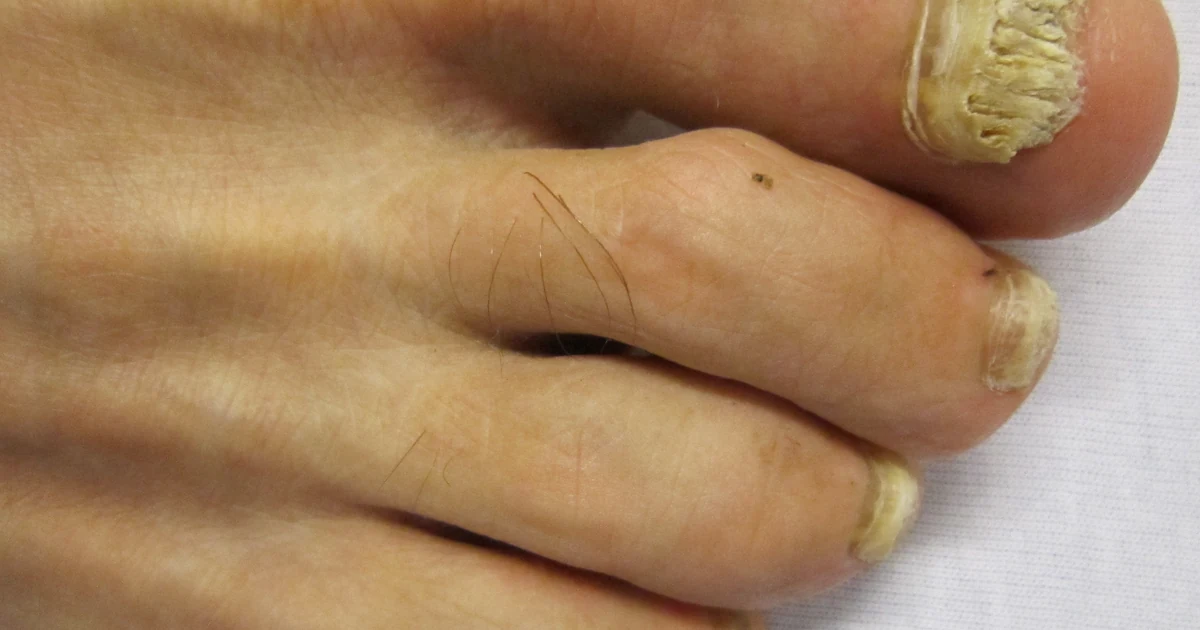
Toe nail fungus, medically called onychomycosis, can make a nail yellow, white, brown, thick, brittle, crumbly, or separated from the nail bed. Those changes are not specific to fungus. Repeated shoe trauma, psoriasis, eczema, lichen planus, and other conditions can imitate it.
A clinician may take clippings or scrapings for laboratory testing. The AAD explains that testing helps confirm fungus and may identify the organism (AAD). Confirmation matters before oral medication because treatment has potential interactions and side effects.
Toenail fungus treatment comparison
No single cure for fungus toenails is best for every person. This table shows the practical differences.
| Treatment | Best fit | Typical commitment | Main limitation |
|---|---|---|---|
| Oral terbinafine | Many eligible adults with moderate or extensive disease | Usually a daily prescription for 12 weeks, followed by nail grow-out | Drug interactions, contraindications, and liver safety screening |
| Prescription topical medicine | Mild to moderate disease, limited nails, or people avoiding oral therapy | Often daily application for about 48 weeks | Lower complete-clearance rates and strict adherence |
| Debridement or thinning | Thick, painful nails or as an add-on to medication | Repeated professional care as needed | Improves comfort and penetration but does not eradicate fungus alone |
| Laser or light device | Selected patients after discussion of goals and evidence | Varies by device and protocol | FDA-cleared devices are generally indicated for temporary clear-nail improvement, not proven eradication of infection |
| KeryFlex restoration | Cosmetic improvement of a damaged nail when clinically appropriate | In-office application with maintenance as the nail grows | Restores appearance but does not treat active fungus |
Treatment may combine approaches. A thick nail may be reduced to support topical treatment, while KeryFlex may address appearance separately.
Oral medicine: usually the strongest option for eligible patients
Oral terbinafine has the best evidence for many adults with toenail onychomycosis. An American Family Physician evidence review lists it as first-line therapy because it is more effective and requires a shorter treatment period than topical options. Reported clinical cure rates for toenails varied from 38% to 76% across the studies summarized in that review (AAFP). “Clinical cure” means the nail looks clear, which is different from a negative fungal test.
The common adult course is 250 mg daily for 12 weeks, but only a clinician can prescribe it after reviewing liver history, pregnancy or breastfeeding, allergies, and interactions. FDA labeling recommends checking for liver disease and obtaining liver function tests before treatment (FDA terbinafine label).
Itraconazole or another antifungal may suit selected cases depending on the organism, health, medications, and prior response.
Prescription topicals: safer for some patients, but slower
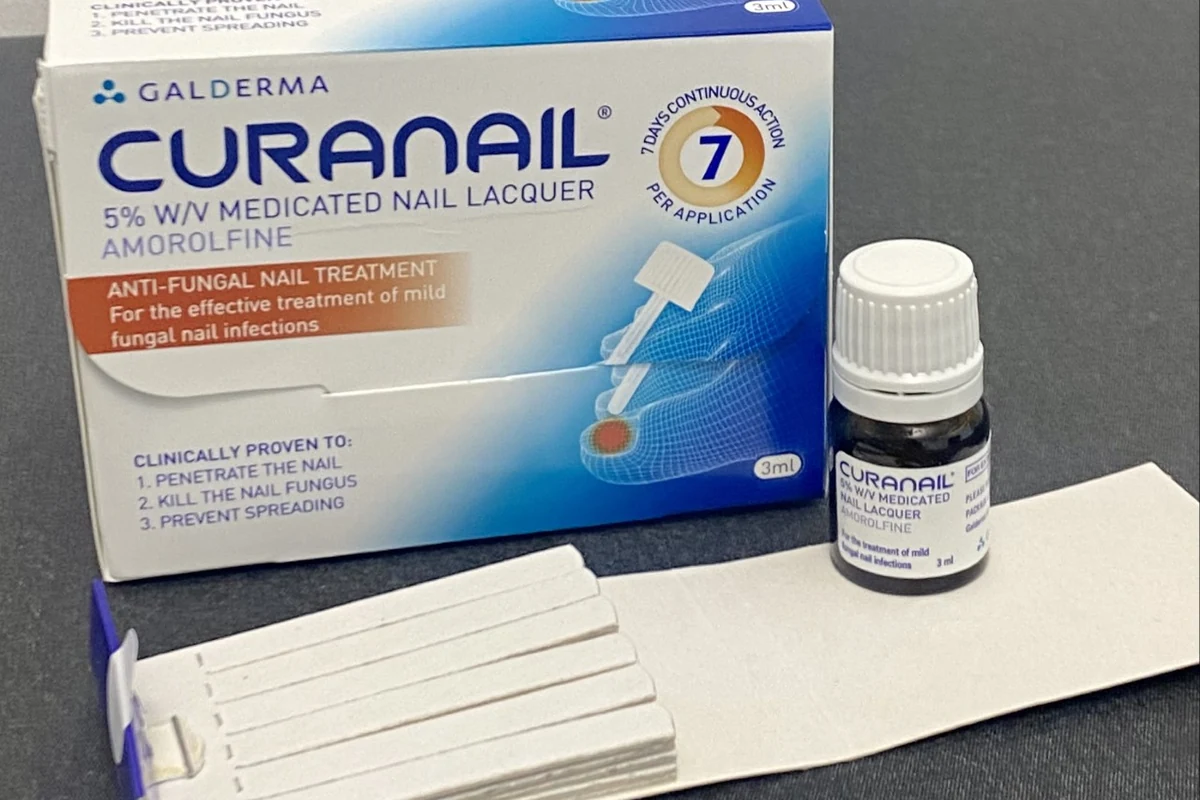
Prescription topicals include efinaconazole, tavaborole, and ciclopirox. They may suit limited disease or patients who cannot take an oral antifungal.
Efinaconazole is typically applied daily for 48 weeks. AAFP reported complete cure rates of 15.2% to 17.8% for efinaconazole and 6% to 9% for ciclopirox toenail treatment (AAFP). These averages do not predict an individual result.
Topical treatment can fail with missed doses, poor penetration, matrix involvement, or a wrong diagnosis. Debridement with medicine may improve response, but debridement alone does not cure infection.
Why drugstore creams and home remedies usually disappoint
Over-the-counter terbinafine cream can treat athlete’s foot on skin, but the AAD states that this skin formulation cannot penetrate the nail well enough to treat nail fungus (AAD). That is why a cream can clear peeling skin between the toes while the nail remains unchanged.
Home remedies have limited or inconsistent evidence, with no reliable cure or dosing schedule established. Aggressive filing and harsh chemicals can injure the nail bed.
For ways to reduce reinfection and manage athlete’s foot, read our guide to preventing athlete’s foot and toenail fungus.
What about laser treatment?
Laser marketing can blur “clearer-looking nail” and “fungal cure.” FDA-cleared devices in this category are indicated for a temporary increase in clear nail. That appearance claim is not proof of fungal eradication (FDA guidance).
Patients should receive clear expectations about the device, goal, cost, sessions, and evidence. Laser is not a guaranteed cure, and higher-risk patients require careful evaluation.
How long until the toenail looks normal?
Treatment time and visible recovery differ. Medicine does not instantly replace the damaged plate. A healthy-looking result appears as new nail grows from the base.
Toenails grow slowly. The AAD advises that a toenail can take a year or longer to grow out after infection clears, while AAFP notes that complete toenail regrowth can take up to 18 months (AAD, AAFP). The big toe usually takes the longest.
Look for a band of clearer new nail near the cuticle. Consistent photos can help track growth.
When should you come in sooner?
Schedule an assessment for painful, thick, lifting, spreading, or treatment-resistant nails. Seek prompt care for redness, warmth, swelling, drainage, a sore, or increasing pain. Higher-risk patients should avoid self-treating and use diabetic foot care when appropriate.
Choice Podiatry Center can confirm the diagnosis, compare options, and set a timeline that fits the nail and the patient. Learn more about Dr. Vivian Iwu.
Book a fungal nail assessment in Marietta. Call (770) 702-8723.